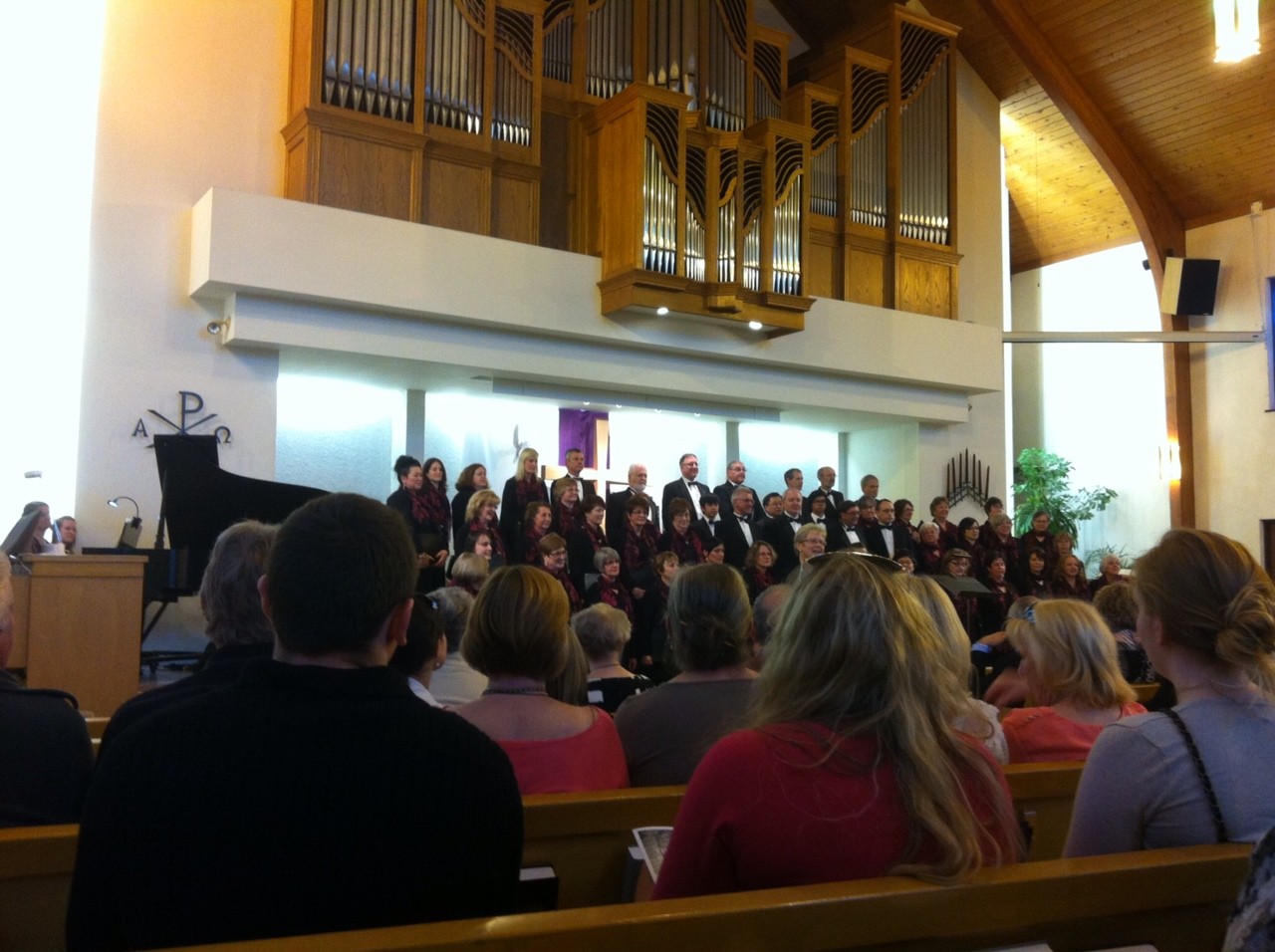
On Saturday, May 4th, I had the opportunity to attend a concert by the Amabilis Singers (tickets courtesy of a thoughtful friend, D).
The concert took place at New Westminster Christian Reform Church, which was a nice, 15 min. walk from home.
As I entered the church, I was impressed by the beautiful organ in the background. The singers walked down the aisle, and after a brief introduction about the singers and the work by their director, Dr. Ramona Luengen, the concert began. There was no intermission and the concert lasted about 80 minutes. Dr. Luengen joked that the singers had been on power bars for the past week to prepare for the long concert!
This concert was titled “The Bach Project” because they aimed to perform Bach’s motets (titled Jesu, meine Freude) interspersed with works by different composers. (Motets are musical choral compositions). And truly, it was surprising to have a serious baroque piece followed by a rousing spiritual. However, I could understand how and why the director decided to do this – because it allowed the material to be presented in a way that could be more relevant for today’s time, pairing and expanding the biblical text in order to “create an entirely new spiritual energy” by contrasting the different works.
The choir (approx. 55 singers) was also joined by guest soprano, Jennifer Driscoll-Holmes, who sang solos for “Hard Trials” and “God So Loved the World”. I thought Jennifer sang expressively and powerfully.
The choir performed the pieces wonderfully, and I didn’t mind the Bach pieces being interspersed with modern works. However, I felt the choir sang the upbeat spirituals more excitingly (if that’s a word) than the slower pieces. And perhaps because of the mood of the concert, the Bach motets didn’t sound as serious or profound as they could have been, and perhaps the Bach motets could have been accompanied by the organ instead of the piano, for a more authentic sound (the piano had not yet been invented in Bach’s time).
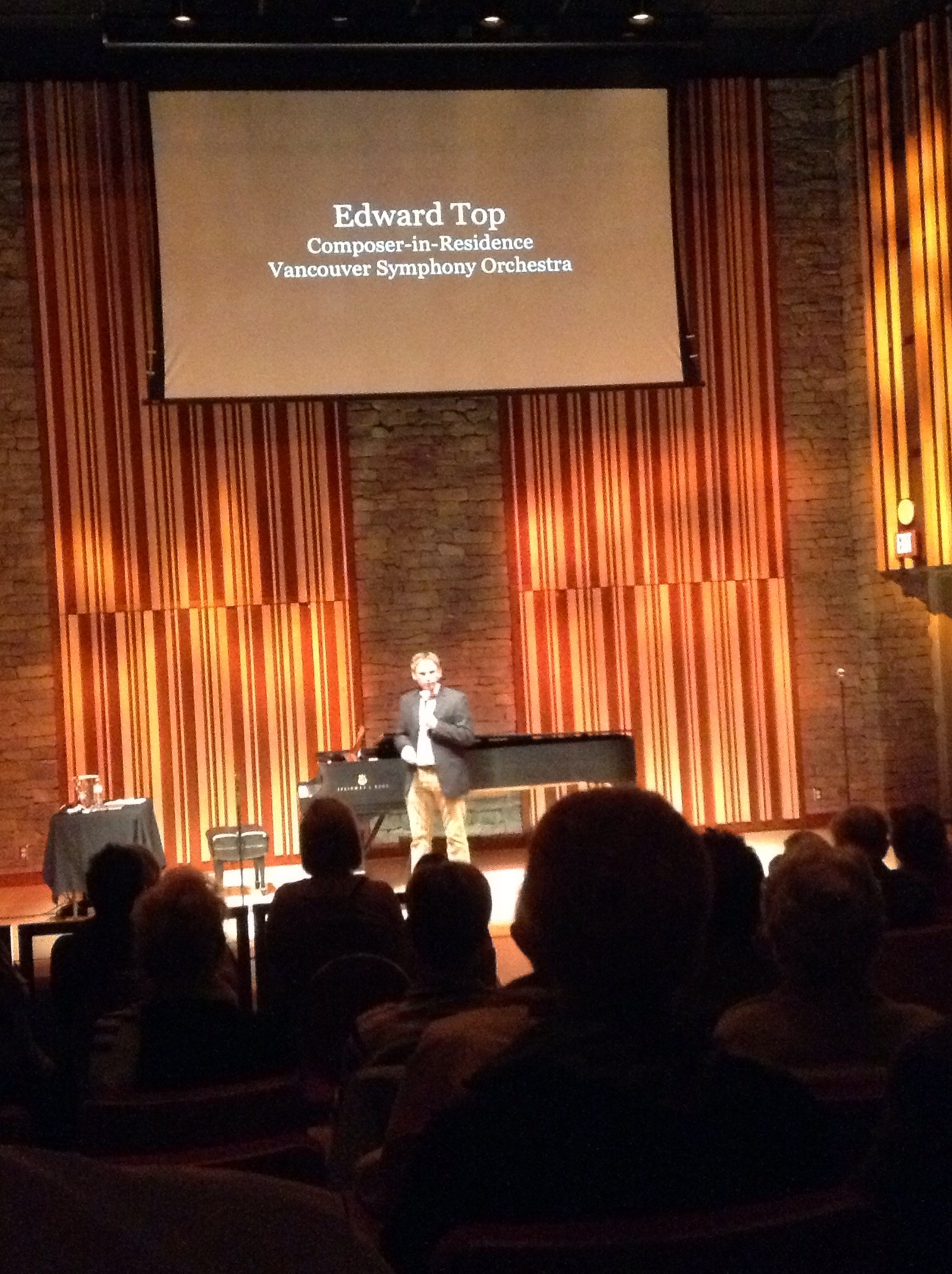
On Wednesday, May 1, I attended a VSO (Vancouver Symphony Orchestra) music educational experience called “Musical Encounters”.
This is put on by the volunteers at the VSO, and features a composer or musician sharing their experiences with the general public. The doors opened at 6:15pm for a wine and appetizer reception, then the talk began at 7pm. At 8pm, there was a Q&A period, and the evening ended around 8:30pm.
This was such a fun event – tickets were only $15 for wine, appetizers, and an educational musical evening!
What is a composer? If you’ve ever felt like the piece you are listening to or practicing is boring and you want to write your own, you’re a composer.
Some interesting points I learned from Edward’s talk:
He comes up with a rough sketch of random musical ideas, then organizes them, and finally orchestrates the music
He was taught how to compose using paper and pencil, but today’s composers often turn to the computer to make things faster, cleaner and easier. He now incorporates both in his composing
He is inspired by paintings and ideas. For example, Bosch’s “Last Judgement”, Ensor’s “My Skeletonized Portrait”
His favourite computer program for composing is “Finale”
Today’s “modern” music may be more difficult and confusing to understand (compared to music from the Classical or Romantic eras) but all music has its own language and rules. It may be difficult because we do not understand and appreciate that language
I greatly enjoyed his talk, supplemented by musical examples. Furthermore, he elaborated on his process on composing one of his recently performed pieces, “Totem” (see my previous post here). I previously wrote that his music sounded like the background to an eerie scene, and he explained why he composed the piece like that, and his purpose (he wanted to immerse the listener to be completely surrounded by a huge sound, and to be overwhelmed by the sounds from the orchestra).
His talk inspired me to continue to think about sounds and composition in a new way.
This is part of an ongoing series of posts where I will explain what to expect when attending a live concert. Music is best experienced firsthand, and depending on the genre, what’s expected for the concert-goer can be quite varied. Here are my thoughts on attending an Electronic Dance Music Concert in Vancouver.
Electric Daisy Carnival
What is an electronic dance music concert (EDMC)?
Electronic music is created by disc jockeys (DJ’s) for dance environments, such as clubs or arenas. The composers themselves become the performer. These concerts celebrating dance music evolved from “raves” (as they were known in the 90’s) to “festivals” or “Dance Music Concerts” in 2000’s. The atmosphere, music, and environment is like a rave; the only difference is that the venue is public, regulated, and legal. Attendees are generally on their feet for most of the concert, and spend their time dancing for hours. There are typically no singers or performers – all the music is mixed or created by the DJ, who are adored as rock stars (although they themselves do not sing or perform on an instrument).
EDMCs are relatively new in mainstream North America. However, it is quickly growing and amassing many young followers. For example, last year in Las Vegas, their annual Electric Daisy Carnival drew 320,000 spectators over 3 days.
What is the venue?
Indoor venues are dance clubs, which have capacity ranging from a few hundred to 5000
In Vancouver, the largest nightclub is Gossip Nightclub for 1000+, while one of the smaller ones includes the Cellar, with a capacity of 234.
Outdoor venues are generally held in open-air coliseums or arenas. Vancouver does not hold an EDMCs outside.
What does electronic dance music sound like?
Since the advancement of synthesizers and mixers in the 1980’s, there has been an explosion of new sounds and possibilities that were not possible with traditional instruments. Synthesizers can also imitate the sounds of voices or instruments (with pre-recorded sounds), thus eliminating the need for the real thing. Electronic music is interested in exploring new sounds or non-musical sounds and incorporating these into songs. This allows the composers and audience to examine and experiment with what is traditionally considered as “music”.
There are no gaps between songs; instead, song are segued by synchronized mixing. There are different types of electronic music, such as house, trance, techno, disco.
The thumping beats are sometimes mixed with vocal music, usually singing that is slow, soaring, simple to follow, and repetitive. This makes sense since the dancing audience want something easy to sing along with and easily audible above the beat. Here are some examples : here, here and here.
$30.00 plus for one concert, $125 plus for multi-day concerts, such as the Electric Daisy Circus.
What to wear to an EDMC?
Attendees are most likely moving and dancing to the music, and because so many people are packed together and constantly moving, you will become quite hot and sweaty! Therefore, it is advisable to wear clothing that is breathable and light.
Men usually keep it simple with a t-shirt, tank or eventually going shirtless.
You may be shocked to see the women wearing outfits in flashy colors, embellished bras, and short skirts. Tutus are common, as well as bathing suit bottoms or spandex shorts.
Accessories such as large plastic sunglasses (the crazier the better) as well as homemade bracelets called Kandi are everywhere.
Trading Kandi
Any more tips?
Today’s top DJ’s around the world include Tiesto, Avicci, Paul Van Dyk, Calvin Harris, Steve Aoki, Armin Van Buuren, Daft Punk, Pete Tong, David Guetta, Deadmau5, Paul Oakenford, and the Chemical Brothers.
Some attendees prefer to enjoy the electronic music under the influence of drugs. This can be extremely dangerous as the distribution of drugs is common and unregulated, not to mention illegal in these concerts, and can result in serious health repercussions. However, drug users claim the drugs heighten their senses, which allows them to experience the concert (and “light shows”) in a deeper way.
Regardless of whether you take drugs or not, light shows can be quite an experience for the senses. A light show is performed by a concert attendee during the concert, and involves moving their body (attached to lights) in a way that is stimulating and fantastic. Here’s an example. http://www.youtube.com/watch?v=BdhhUAZHNi8
And here’s a tutorial on how to give a light show.
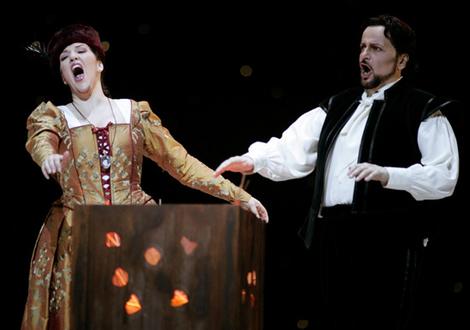
This is the first of an ongoing series of posts where I will explain what to expect when attending a live concert. Music is best experienced firsthand, and depending on the genre, what’s expected for the concert-goer can be quite varied. Here are my thoughts on attending an Opera in Vancouver.
Reuters/Gustau Nacarino
What is an opera?
An opera is an art form combining solo and choral singing, acting, dancing, and playing musical instruments against a staged theatre backdrop. The entire opera may be sung (ex. number opera), or have some speaking (ex. Singspiel ). The words of an opera is the libretto. There may be elaborate or simple costumes and set design. The singers are accompanied by an orchestra, or a group of musicians.
What is the venue?
Operas usually take place in opera houses, or in a theatre setting, ranging from small theatres for 100 (such as Pyatt Hall), to larger ones, (such as the Queen Elizabeth Theatre) which seats over 2,900.
Photo: MichaelThoeny
What does an opera sound like?
There are many different types of operas, depending on the origin of the composer, when it was composed, and the audience. German, English, French, Italian,Russian, operas have their own unique aspects, and early operas are very different from more modern/contemporary operas.
Where can I see an opera?
The biggest and most well-known opera company in BC is the Vancouver Opera. They usually perform 4-5 operas per season, and offer perks such as GET O.U.T. program, where anyone under 35 years old can buy tickets for only $35! (There are a limited number of tickets reserved for those customers, and you must present valid ID when picking up the tickets). Performances take place at the Queen Elizabeth Theatre.
If you prefer a more Asian flavor, check out the Vancouver Chinese Opera , one of the major forms of Chinese opera. They perform two major productions a year. Their highly elaborate costumes and makeup, and use of Chinese instruments (not commonly used in Western music) is certainly something that must be experienced. This non-profit society also offers singing lessons for adults and children.
Female Chinese Opera Singer
The Vancouver Concert Opera society is smaller compared to the Vancouver Opera, but tickets are considerably cheaper (around $40 per person) and take place in a smaller venue (usually Pyatt Hall at the VSO School of Music in downtown Vancouver, or the First United Church in White Rock, Surrey.
For more operatic societies in the Pacific .Southwest/Northwest, check out the listing here.
What is the average age of a concert-goer?
Late 50’s-early 60’s, says the Met Opera. But opera societies are trying to woo younger audiences by offering discounts for families and those under 35 years old.
What is the average cost of going on an opera?
It can be quite expensive. ranging from $190-35, depending on the opera society, and where you are sitting.
What to wear to an opera?
Some people get very dressed up for this, but semi-formal/Sunday best is fine. Generally no jeans, sloppy dressing.
Any more tips?
If you’ve never seen an opera before, go to these, that feature beautiful music and plots that are exciting and easier to follow:
-Aida by Verdi
-The Magic Flute by Mozart
-The Marriage of Figaro by Mozart
-Madam Butterfly by Puccini
-Carmen by Bizet
It is best to do some homework before attending an opera to get the best out of your experience. Look up some facts on the history, composer, and plot of the opera, as well as any stand-outs to look for, such as popular arias (a beautifully sung melodic solo/duet). The whole POINT of going to an opera is not like going to a movie, where you want to be surprised by the plot. Instead, it is to listen and enjoy the singing, music and acting, and to see how the opera has been adapted and performed. You don’t have be an opera expert to attend an opera, and you may be pleasantly surprised to see not everyone around you is an opera expert either!
“It’s not over until the fat lady sings”
This expression means one should not presume the final outcome until the end. This phrase refers to the buxom character, Brünnhilde in Richard Wagner’s epic opera cycle “The Ring of the Nibelung”. where she sings an extended aria at the end of the opera.
I end with my favourite duet from an opera :Delibe’s Flower Duet from Lakme. Love her expression at 1:07 – she’s so excited to start the duet!
This fall, I will be moving to Toronto as my husband studies for his PhD in Egyptology. This means i will no longer be teaching my faithful and wonderful piano students, whom I have grown to respect and adore. Instead, I will be heading east to the land of the highest building in North America, the largest city in Canada, diverse (nearly half of the population are born outside Canada), and probably the warmest and coldest temperatures.
However, I am also excited at the possibilities, as Toronto is home to the Royal Conservatory of Music, and has a bustling music and arts scene. I hope to continue to teach piano, and also work on my skills as a piano technician too (currently seeking out someone willing to take me on as a volunteer/apprentice).
I also want to learn more about the Kodaly and Suzuki methods, in order to grow as a music teacher and be able to adapt better to my students’ needs. Also, Toronto is so much closer to many destinations on my bucket list, including Nova Scotia, Montreal, Newfoundland, and flights overseas will be a lot cheaper than from Vancouver.
Feel free to leave any comment or tips about Toronto.
I wish all my piano students continued success in music, and hope that you will continue learn and grow with your new teachers 🙂
On Sunday, March 10, 2013, I attended at matinee performance by the Vancouver Opera at Queen Elizabeth Theatre.
I arrived 10 min. late for the pre-talk in the mezzanine, so unfortunately, only picked up a few details such as, the opera was infused with Coast Salish elements and how the Vancouver Opera consulted First Nations experts for everything from costume design to how to pronounce names or words in their native language.
For example, aboriginal names were given to the characters (on top of the ones given by Mozart).
As the time approached for the start of the opera, I noticed many families with young children attending the opera. I was nervous about that because the running time of the show was nearly 3.5 hrs with a short intermission.
The opera opened with a video montage of Vancouver while the orchestra, directed by Leslie Dala, played the overture. The video progressed to scenes of the forest and nature, and then the opera began.
I was pleasantly surprised to find the liberetto had been adapted into English. Some would say that instead of saying this was Mozart’s Magic Flute, it should have been titled “An adaptation of Mozart’s Magic Flute”. Also, this type of opera is called singspiel in which singing is intermixed with speaking.
The good:
-this was easy for the younger audience to understand, since it was in English, with English subtitles
-the costumes, especially that of the Queen of the Night, was incredibly sumptuous and fantastic – just like the coloratura soprano’s voice
-the staging and design was ingenious. The set was easily adapted to become like a forest, or a cold, dark questing ground
The bad:
-the time change (Spring forward!) on Sunday morning meant that everyone lost an hour of sleep. That, combined with a darkened theatre, soothing singing and quiet orchestral music meant very long lineups at the coffee bar during intermission
-Papagano, the bird catcher in the story, stood out at the most interesting character. The singers who portrayed Tamino and Tamina sang beautifully, but they were not as memorable.
Get OUT to see an Opera at Vancouver Opera! They have discount codes that appear on their blog usually a few weeks before the opening of their operas, which means that if you are 35 years and under, you get to see the opera for only $30.00! (compared to up to $190.00 per seat!) Click here for their blog.
I had the opportunity to attend a masterclass by Dina Yoffe last week. A masterclass is like a special piano lesson with a well-known performer, in front of an audience. The students who were chosen for the masterclass had to undergo an audition, so the teacher mainly works to polish and refine their playing.
Dina has been touring the world and performed with the VSO on March 2 and 4. She played Chopin’s Piano Concerto No. 2 in F minor.
Dina is an amazing Frederic Chopin performer. Which means she is passionate about playing music by the composer, Chopin. She often plays in recitals around the world celebrating the music of Chopin and has recorded many discs with her playing his music, among many other composers. Click here for more info.
Here is one (of many!) youtube videos where she plays Chopin. Listen to the range of dynamics she uses. How she caresses the keys to create a soaring singing melody with sensitive accompaniment. Look at how happy she is to play his music and to share it with the audience:
At the masterclass, the following comments she made stood out:
-See how you walk so relaxed and free. Now why do you suddenly hunch up when you play the piano? You must also play relaxed and free, not scared.
-Count before you start so that you don’t start with one speed and it becomes another speed in the middle of the song
-listen to the balance between the right and left hand
-try singing the melody. Now play that way.
-how much time do you spend practising every day? Why don’t you practice a little more? What do you want to be when you grow up? Why not a concert pianist? You can!
Dina was a wonderful mentor to the young pianists. She was not too “scary” in her approach to the pianists, yet she offered comments that helped improve their played almost immediately. I hope Dina comes back to Vancouver soon!
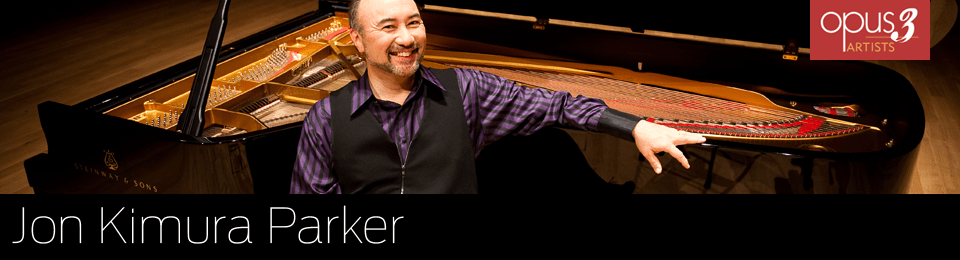
On Monday, January 21, 2013, I had the pleasure of seeing Jon Kimura Parker live in concert with the Vancouver Symphony Orchestra.
The evening featured three pieces, “Totem” composed by the VSO’s resident composer, Edward Top, “Piano Concerto in A minor” by Edvard Grieg, and “Symphony No. 5 in B-flat Major” by Sergei Prokofiev
The first piece, Totem, was made of three pieces, or “tableaus” named Angst, Rite and Mosh. I personally found it intriguing how the composer could make traditionally sounding instruments sound so bleak and creepy. For example, the violins imitated a slow siren sound, and the percussionists were able to use instruments such as a “thunder sheet” , a drum kit (not found in orchestras!) and an actual siren. However, this is not the kind of music one would usually wind down and relax at the end of the day. This music is better enjoyed live, or as background to a tense movie scene.
After the performance of Totem, the man everyone was waiting for, Mr. Parker, strode out, beaming widely as he acknowledged the audience and took his place at the Steinway piano on centre stage. There were a variety of ages in the audience, from white-haired seniors to young children and teens.
Mr. Parker began the concerto with the famous opening passage, and immediately everyone perked up to listen to a true master create beautiful music. After the finale (the ending bars were so powerful, he nearly stood up while he played them) , Mr. Parker received a standing ovation, and came back to play an encore.
What a surprise! Mr. Parker stated his love for a certain composer named Danny Elfman, then proceeded to play the theme from the popular TV animation, the Simpsons! It was a crowd-pleaser and the audience thanked pianist with another ovation.
After intermission, Mr. Parker left, and the Vancouver Symphony Orchestra played the Prokofiev symphony. The Orpheum Theatre filled with sumptuous sounds from the Soviet composer.
Although Mr. Parker’s performance was dazzling, it was done all too soon, and I was left wanting more, and wished he could have stayed to perform after the intermission. I hope Mr. Parker (who grew up in Vancouver) will come back soon!










 Hannah's Piano Studio