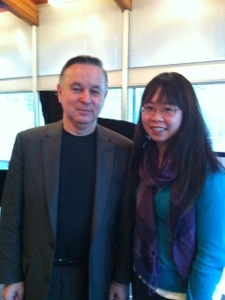
Meeting Christopher Norton

Last December (only a month ago) I had the opportunity to meet living breathing composer Christopher Norton ( I say that because many of my students can’t believe that there are composers who are alive today!). If that name sounds familiar, that’s because you can find his works in the Royal Conservatory syllabus for piano and his Microjazz series is immensely popular. Mr. Norton is an active composer who continues to find time in his busy schedule of adjudicating, masterclasses and teaching around the world to composer music!

His specialty is jazz and improv, and at a class hosted by the BCRMTA, he showed music teachers how to incorporate jazz and improv in our private lessons. He showed us how easy it is to begin to learn how to improv by adding gradually adding various notes and rhythms to a simple pattern.

Mr. Norton was a delightfully entertaining speaker with funny anecdotes and jokes, and showed us videos of students around the world playing his pieces.

Although I would have loved for him to delve more into HIS creative process, it was fun and interesting to learn different ways to incorporate more creativity in our lessons.

To follow him on Facebook, click here. He often posts videos of people playing his pieces, and this can be helpful when learning them for yourself. Furthermore, he does check his Facebook often and if you ask him a question or post a video of YOURSELF playing his piece, he can give you his comments directly! How easy it is to communicate with the composer himself in modern times!

Jon Kimura Parker’s Rendition of Brahm’s “Piano Concerto No. 2”

In watching some videos on YouTube from performances from renowned pianists, I came across Jon Kimura Parker’s performance on Brahm’s ‘Piano Concerto No. 2’. It is a truly magnificent work:

He will be performing at Vancouver Symphony Orchestra this Saturday, 19 January and Monday, 21 Monday. Get your tickets. If you are 30 and under, they are $15! More details here: LINK.

Christmas 2012 performance

Dear Students and Family

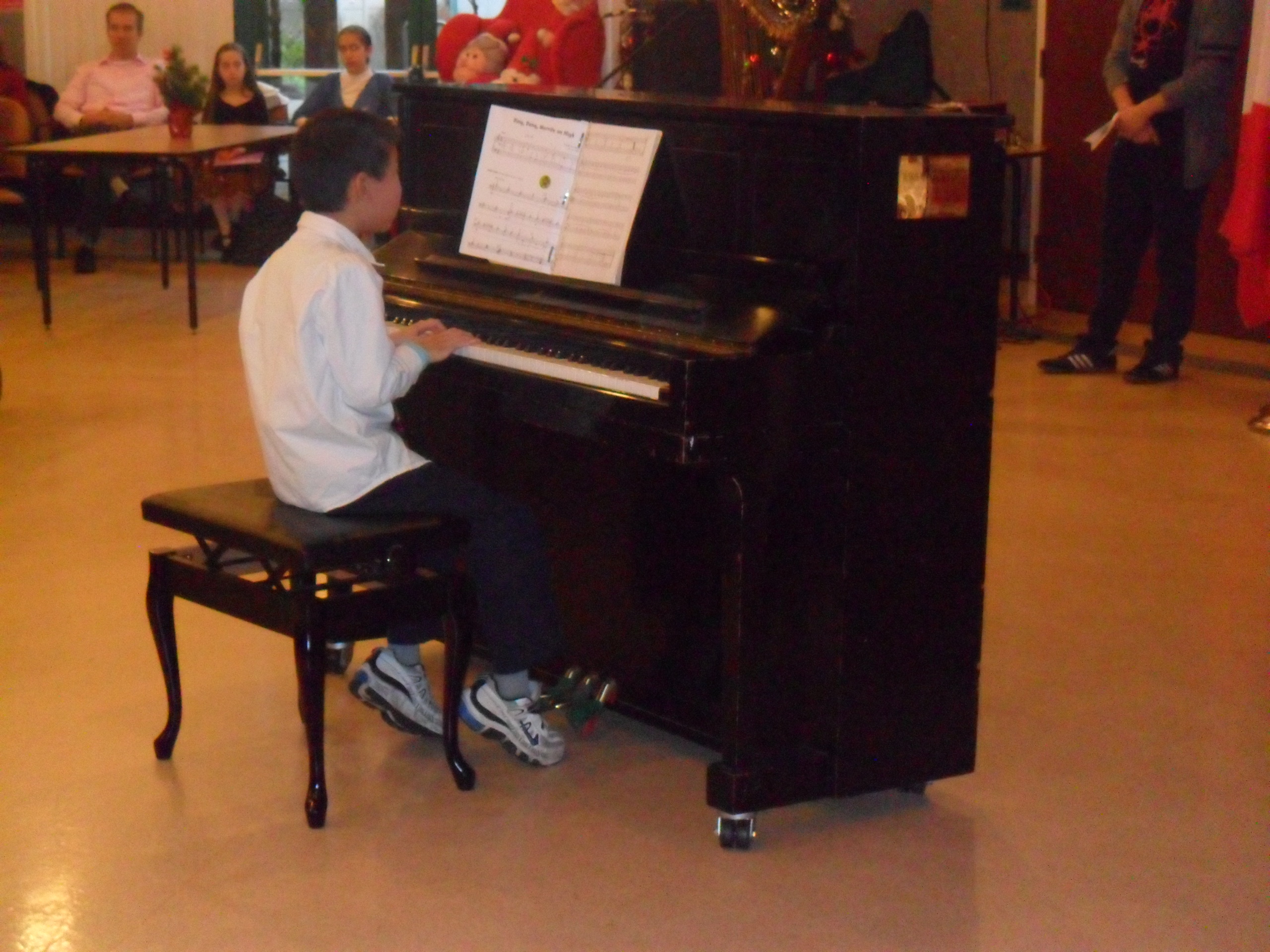
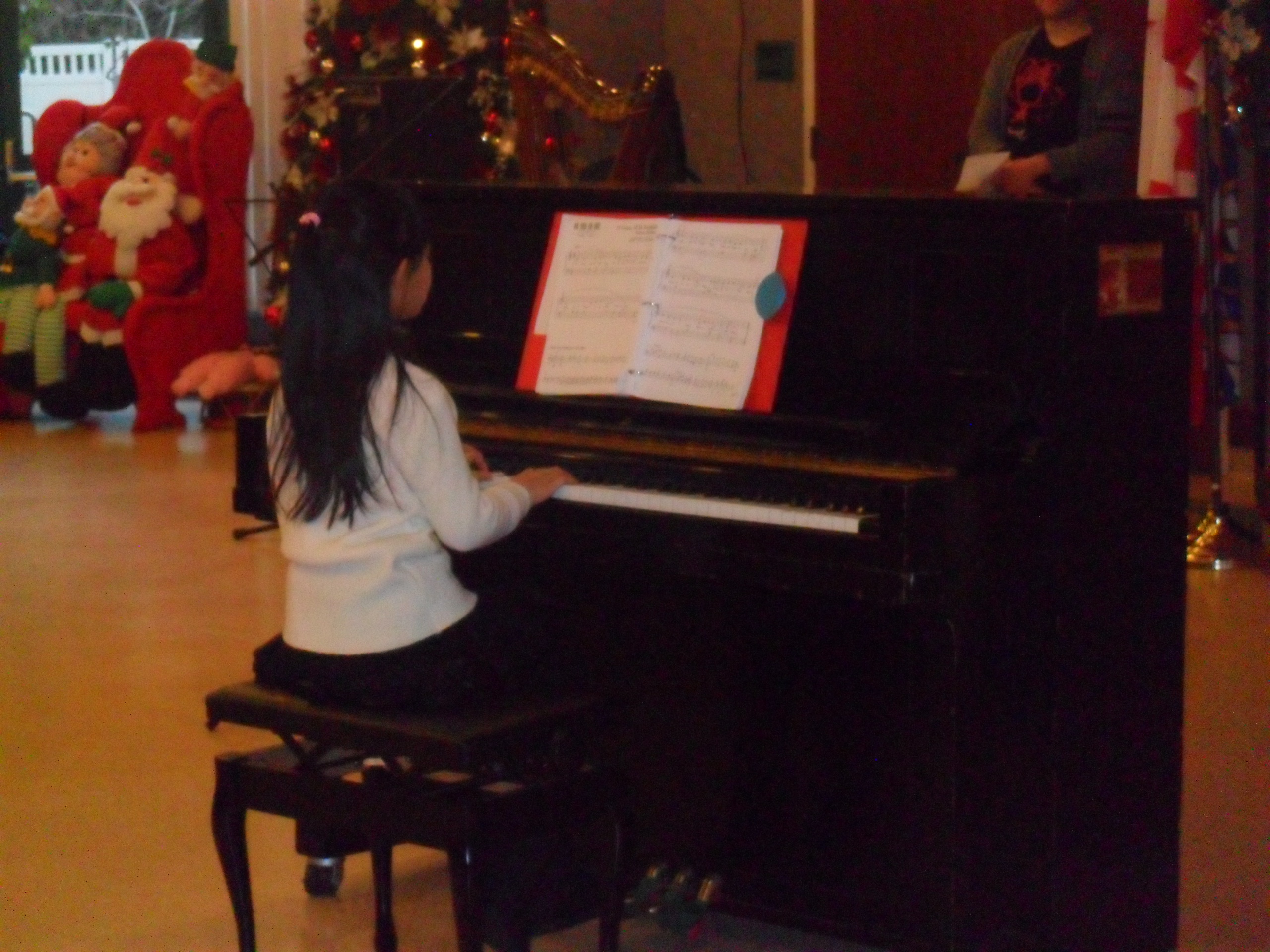
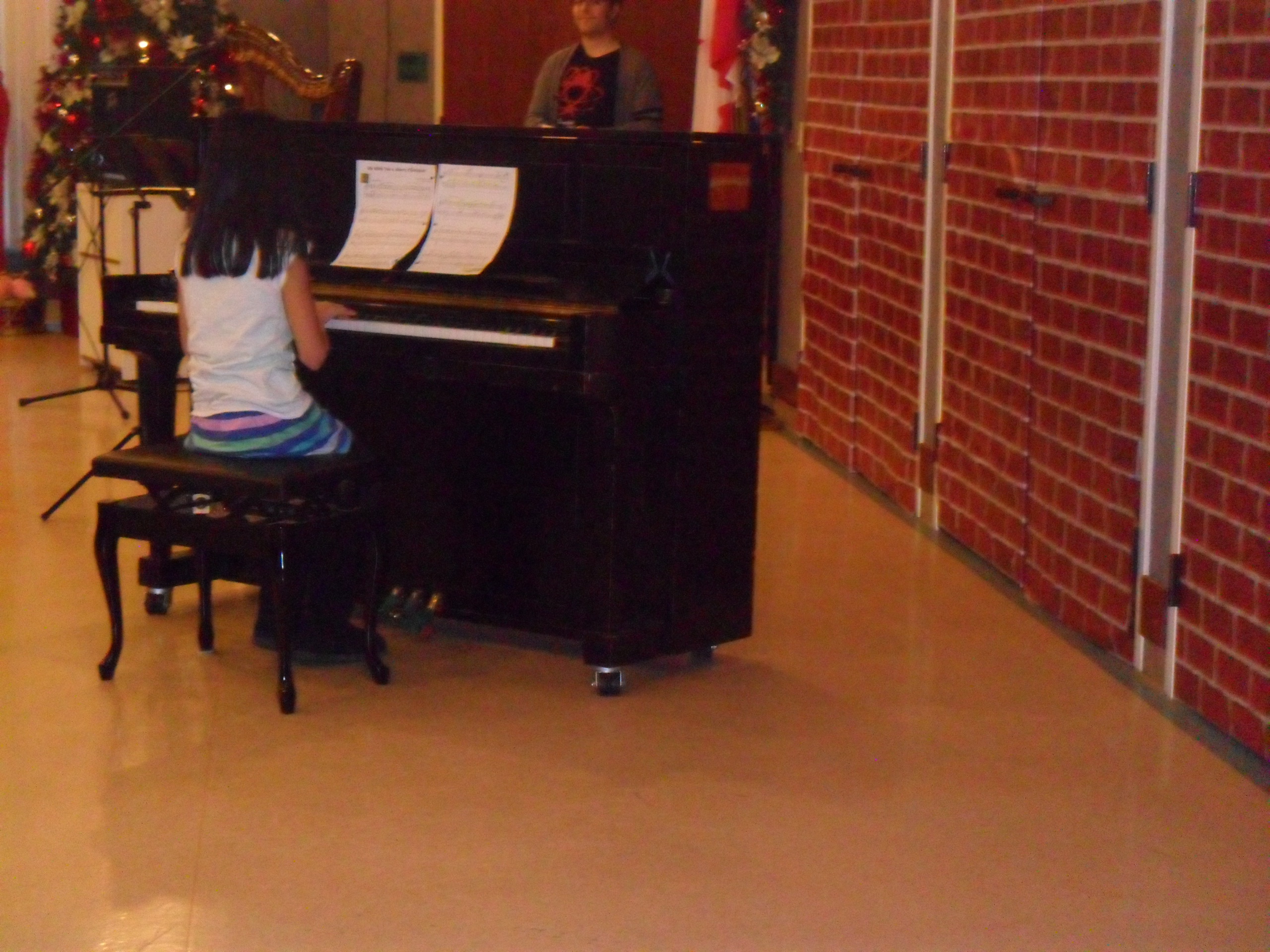
Thank you for participating in the Christmas performance at George Derby Centre. The residents and their family were delighted to hear your wonderful piano music. We were lucky to Ms. Shannon Ingersoll, a performer and music therapist, to open and close the recital.  Here’s her website: http://www.shannoningersoll.com

Below are photos from the event. Have a Merry Christmas and see you in the New Year!Image

ImageImageImageImageImageImage

ImageImageImageImageImage

How to fix broken key tops

What do you do when your piano keys (the top plastic part) becomes chipped or broken over years of use ? Or how difficult would it be to fix broken key tops on a used piano that you plan to purchase?

What you will need:

-Replacement plastic keytops (if your keys are ivory, you may be lucky enough to find ivory keytops from old pianos, but this is rare since the use of ivory for piano keytops is banned).  You can easily find plastic keytops at Ebay.

-PVCE glue (keytop glue available online)

-A heat gun (here’s a heavy duty one, and here’s one I had for craft projects)

-razor blade (from a utility knife)
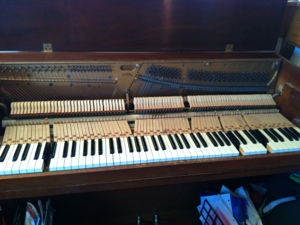
Step 1: remove all the pieces of the piano, until you can easily remove the keys

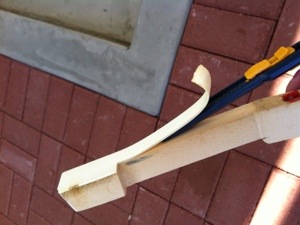
20120930-165406.jpg

Step 2: remove the chipped keys.  Make sure you know which number the key is, so you can put it back correctly.

20121001-121639.jpg

Step 3: get your heat gun and heat the key top ( for me, I stop heating immediately after I smell a slight odor).

Step 4: use a razor blade from a utility knife an gently slip it between the wood and the plastic. If it doesn’t slip between easily, you’ll need to continue heating the key. Be careful NOT to gouge the wood with the blade. If you start to gouge the wood (depends on the direction of the wood grain), stop immediately and begin from the other end.

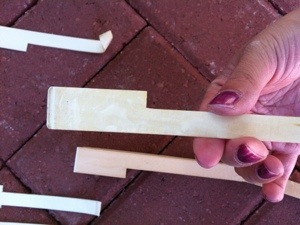
20120930-165740.jpg

As you can see in the above photo, I accidentally burned a bit of plastic by holding the gun too closely, too long…be careful and do this under good ventilation!

Step 5: once the plastic is removed, glue the new key top with PVCA glue by applying to the keytop.

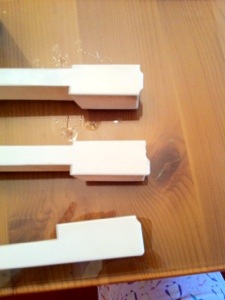
20120930-165908.jpg

Step 6: carefully place the plastic keytop on the wood and wait a couple hours until glue is fully dry.

Step 7: put the keys back into the piano and you’re done! Overall took me about 30 min to remove the piano pieces and replace the old keytop with the new one!  Total cost: keytops and glue and instructions from Mark Cerisano, RPT at http://mrtuner.com/courses.htm , heat gun I bought years ago, approx. $20.00

The new keytop should fit exactly on top of the wood key.  If it’s too large, simply sand down the plastic top.  If the wood is larger than the keytop,. file down the wood. You’re done!

Side note: once I removed the keys from the piano bed, I discovered a lot of dust and debris underneath. Here’s what I collected with tweezers (eww):

20120930-170257.jpg

Is my child normal?

A common question asked by parents is “How is my son/daughter doing” or “is my child progressing normally?”.

When their child attends school ,they have “meet the teacher” evenings where the teacher discusses the child’s progress in school. Twice a year, they issue report cards detailing how the child is doing in school, sometimes along with comments for improvement.

Tangible report cards are handy as they provide a gauge as to the student’s progress. However, most piano teachers do not issue a yearly progress report card. Unless the student participates in an exam, it can be difficult to gauge how their child is doing in relation to other children.
Here’s what I’ve observed to be the “norm”:

-girls progress faster than boys in terms of fine motor skills and language. These skills are required to learn how to read music and coordinate their bodies to play an instrument: http://www.singlesexschools.org/research-brain.htm

-Children who have not begun going to school tend to be EXTREMELY difficult to teach. They have very short attention spans because they do not have practice/experience sitting quietly in a class setting.

-In the first 6-7 months of study, a child aged 5-8 should be able to complete the “primer” level of Piano Adventures (by Faber and Faber).

-Typically, a child should pass one grade level in music in one school year (sometimes longer if they are preparing for a piano exam).

-In Primer books (such as those by Faber and Faber, or Bastien), students should “pass” a piece every 2 or 3 weeks. Max. 4 weeks to “perfect” a piece or for fluency.

-In the Royal Conservatory books (issued by the Royal Conservatory of Music in Toronto, Canada), pieces should be fluent in no more than 5 months, and memorized and performance-ready in about 7-8 months.

-Being “left-handed” or “right-handed” does not seem to make a difference in progress.

;

After all these observations, this does not mean that boys should not learn an instrument, or that young children can not be exposed to music! Contrary, boys grow up to become excellent musicians, and many of the world’s famous pianists are men.
Also, parents can begin to introduce music learning and enjoyment to their babies as soon as they are born! Parents who are interested in enrolling their young children (under 5 yrs old) in music lessons should consider GROUP LESSONS such as Music Together which specializes in exposing music to young children.

If the child is taking longer than a year to complete a primer book, the child may need more parental involvement/encouragement in their home practice, or may have a form of developmental impediment (Autism, Dyslexia, Learning disorder, etc.). Alternatively, the child may be simply involved in too many activities and can not spare the time or energy required to progress in music.

I hope this was helpful, and as always, I welcome your constructive comments

Music and the Olympics

As many of you are following the Olympic Games in London, you may have noticed athletes listening to music before their competition.

According to the article below from the Vancouver Sun (I can confirm this from my personal experience), music can motivate or calm you:

——————————————————————————————————————————————————————–

Michael Phelps of the U.S. listens to music as he arrives for the men’s 200m butterfly semi-finals at the London 2012 Olympic Games at the Aquatics Centre July 30, 2012.

LONDON — Swimmer Michael Phelps uses it to get into his zone, marathon runner Paula Radcliffe uses it to psyche herself up, and gymnast Louis Smith uses it to calm himself down.

Whether it’s aggressive rap, mellow reggae or calming country, music has become an integral part of many Olympians’ medal plans. And science shows its effect is far more than superficial.

“Music can have a genuine effect, both before and during the event,” said Costas Karageorghis, a sports psychologist and one of the world’s top experts on the use of music in elite sports.

Karageorghis, who describes music as “like is a legal drug for athletes” says its benefits lie predominantly in what he calls its psycho-acoustic properties.

“Music can have either a stimulative or a sedative effect, depending on its psycho-acoustic properties,” h e said in an interview du ring the London 2012 Olympics.

It’s not just noise. A large body of scientific evidence points to the effects of music on ease of movement, perception of exertion and even on oxygen efficiency during sport.

Music has been shown to improve endurance performance, helping people run 18 percent longer, according to one study.

Research published in the Journal of Sport and Exercise Psychology showed that runners listening to tracks by artists such as Madonna, Queen and the Red Hot Chilli Peppers not only ran further and longer, but also enjoyed it more, even up to the point of collapsing at the end of a training session.

Karageorghis’ most recent study, published this month in the Journal of Sports Medicine and Physical Fitness, found that music at a tempo that matches the movement of the activity can even improve oxygen efficiency. Athletes who exercised in time to music had a 7 percent decrease in oxygen uptake.

“Physiologically you’re more efficient when you are synchronising your movements to music,” Karageorghis said.

“Music coordinates our actions in such as way that we minimise the inefficiencies and optimise the mechanics of our movement.”

The use of music in training and preparing for competition was popularised by athletes such as American triple jumper Willie Banks and 400m hurdler Edwin Moses soon after the advent of the Sony Walkman in the late 1970s.

“Since then there’s been an explosion in the use of music by athletes,” said Karageorghis.

At the London 2012 Games, which moved into the 6th day of competition on Thursday, there is no shortage of fans of the technique among those fighting for medals.

Phelps and his fellow American swimmer Ryan Lochte are said to be big Lil Wayne fans, while their Chinese rival Sun Yang was also sporting a set of headphones as he headed for the starters’ blocks at the Olympic pool. All three have won medals already.

Gymnast Louis Smith listens to reggae music before competing on his signature event, the pommel horse. “It might seem like an unusual choice and it might not work for others, but it calms me down and gets me focused,” he told Reuters.

Table tennis player Jorgen Persson, who was playing in his seventh straight Olympics – and last – says he also prepares for games with his iPod turned high.

For the 46-year-old Swede, it’s mostly rock, or rock and roll, that hits the spot. “It’s good for the action,” he said. “I have some special songs. At the moment I am listening to The Gaslight Anthem and Alabama Shakes.”

Karageorghis, who counts double Olympic rowing gold medallist James Cracknell among his former students and is now training world 400m hurdles champion Dai Greene in the art of musical medalling, says it makes sense for different athletes to use different tracks in different ways.

“If a track has a very strong rhythmic feel, with crashing guitars and an aggressive lyric, it is likely to have a rousing effect,” he said.

He notes that the Ethiopian marathon star Haile Gebrselassie smashed several world records with the help of the techno pop song “Scatman”.

For others, the role of music is to block out any negative thoughts so that athletes can focus only on the race or match.

But while swimmers, for example, are able to take their music right to the edge of the pool and use it to help them ignore distractions, runners and other athletes must leave their personal music players in the warm up zone.

“Thinking can be an athlete’s worst enemy,” said Karageorghis. “Music provides a good way for them to dissociate, regulate their emotions effectively and stay in the here and now.”

© Copyright (c) Reuters

Protect your memory – learn an instrument!

The article below is from a posting in Feb. 2012 by ABC News:

Playing Music Protects Memory, Hearing, Brain Processing
COLUMN by LEE DYE  abcnews.go.com
Feb. 1, 2012 —

Study Gives First Concrete Proof Playing Instrument Helps ‘Neural Processing’

Want your brain to be as fit as a fiddle, even after you are old and gray? Then learn how to play a real violin. Or a tuba. Or just about any other musical instrument.

Scientific research over the years has shown that studying music has many rewards, from improving performance in school to dealing with emotional traumas, but the newest research shows that it can do even more than that. It can fine tune the human brain, biologically and neurologically enhancing its performance and protecting it from some of the ravages of time.

Think of musical figures who have had long careers — from Mick Jagger to Paul McCartney to Barbara Cook — and it appears there’s something, beyond love of their art, that has kept them going.

Nina Kraus’s Auditory Neuroscience Laboratory at Northwestern University in Evanston, Il., has been studying how music affects the human brain for years now, and the latest study from that busy lab shows that musicians suffer less from aging-related memory and hearing losses than non-musicians. It is believed to be the first study to provide biological evidence that lifelong musical experience has a good impact on the aging process, according to Northwestern, where Kraus serves as professor of neurobiology, physiology and communication sciences.

Kraus and her colleagues attached electrodes to the heads of 87 persons ranging in age from 18 to 65, all of whom had normal hearing. About half the subjects had started taking music lessons before the age of nine, and had remained active in music throughout their lives. The others had fewer than three years of music lessons, and were classified as “non-musicians.”

The purpose of the electrodes was to measure what neurologists call “neural timing,” or how long it takes for a human brain to process an auditory signal. The normal aging process slows that timing, making it more difficult to process sounds, even the sound of a friend’s voice in a crowded restaurant, Kraus said in a telephone interview.

The electrodes provided a “very objectively quantifiable” measurement of that processing time, which would normally be expected to be considerably slower in older persons than younger. But that did not turn out to be the case.

Playing Instrument Helps Processing, Hearing

Older participants in the study who had made music a big part of their lives could process the signal just about as fast as the younger participants. The “non musicians,” however lagged considerably behind, indicating that playing a musical instrument was crucial to retaining memory and hearing.

“As a musician, you get very good at pulling out important information from a complex soundscape,” Kraus said, whether it’s a musical performance or listening to someone speaking in a noisy room. “The orchestra is playing and you are pulling out the violin line, or the base line, or some harmony. You are always pulling out meaningful components from sound and that’s really not all that different from hearing your friend’s voice in a noisy restaurant.

“That involves hearing, but it’s related to how quickly you can process information and how well you remember it,” she said.

Both of those talents tend to decline with age, which is why so many older persons complain of memory lapse and an inability to hear someone in a noisy place. But this work suggests it doesn’t decline, if playing a musical instrument is a personal passion over time.

Kraus said it’s not enough just to listen to music. It’s the intensity of actually performing that is the active ingredient.

“You are not going to get physically fit by watching spectator sports,” she added.

Of course, neural timing is not the only component of hearing loss. The inner ear physically changes with age, and the tiny hairs that act as acoustic antennae inside the ear canal deteriorate.

And loud noises, like gunshots, shop tools, or the screaming shockwaves from acid rock, can all damage hearing. None of the participants in the study suffered that kind of damage. And only the “musicians” showed measurable signs of overcoming the tendency of the human brain to gradually slow down the time it takes to receive, process and act upon an auditory signal.

Kraus, whose latest study is in the online edition of the journal Neurobiology of Aging, says the research shows that it’s not just hearing that is helped by music. It’s also memory, which is among the most common complaints from normal aging.

“If you couldn’t remember what I said to you a few seconds ago, you wouldn’t be making sense of what I’m saying right now,” she said.

So music is good, but is it ever too late to start?

“From everything I know about how the brain changes with experience and what I know about the effect of musical experience on the nervous system, my scientific gut feeling is that it can only help,” she said, quickly adding that she doesn’t have the data to back that up yet.

Asked if she is a musician, she replied:

“I play a couple of instruments, not particularly well, but I play them with great joy.”

How to conquer the inner beast – Part 2

This is a continued part of a series of blog entries about the techniques and tips from “The Inner Game of Music” by Barry Green and Timothy Gallwey.  I have summarized the findings from this book – personal thoughts will be in brackets.  The author’s website can be found at http://www.innergameofmusic.com .


AWARENESS

The skill of “awareness” is important as it allows us to pay attention to events, people, and things by using all our senses.  When we are aware, we realize what feels and works best for us individually.  It facilitates the ability to identify and solves problems instantly!

We face external and internal distractions, but there is a technique we can use to minimize their impact on us:

Accept distractions, then consciously focus our attention elsewhere

The goal is to be able to focus on the present and not drift into the past or future.  Green suggests 4 ways to bring our concentration back into the present:

  1. Focus on SIGHT

-Ex. Look down at your fingers, notice if they’re on the wrong keys

-Ex. Watch the notes on the score and absorb all details (slurs, dynamics, etc.)

-Ex. Close your eyes and visualize the score


  1. Focus on SOUND

-Ex. Take a moment to listen to the sounds around you (such as cars outside, the hum of electricity, people talking, etc.).  Now focus on ONE sound for a moment.  Did the other sounds fade into the background?

-Ex. When playing music, focus on the sound of your playing


  1. Focus on FEELINGS

-Ex. Listen to some music – does it express happiness, sadness, excitement? Relax and float into the feelings the music expresses. How do you feel? Notice your own feelings.


  1. Focus on WHAT YOU KNOW

-Ex. Our brain has stored all the experiences we have ever had with music.

-Ex. Find out more about the piece you are playing – does knowing the background change the way you play?

When we become aware of something, we may automatically try harder to fix it.  However, the actual purpose of awareness is so that we can accept “what it” without fighting it.  For example, “Jonathan” had jittery, sweaty hands before each recital.  And he was afraid this would happen, which of course, they did. When the teacher showed him that his sweaty fingers didn’t really affect the quality of the music, he became less anxious and “allowed” them to sweat.  The problem gradually disappeared.

Another way to conquer the problem of feeling anxious is to see how much you can notice about your present condition.  Locate the most severe part of the problem (sweaty hands, upset stomach, etc.).  Does putting your attention on the problem change anything? Now see if you can still play the piece?  Give your symptoms of nervousness/anxiety permission to be there, then choose another focus for your attention (sight, sound, feelings or what you know).  Did you notice your physical problems tend to disappear as you become more involved in your playing?

Awareness can also help solve problems in playing.  Although Gallwey is the originator of the “inner game” idea, he is not a trained musician. But one day, he gave a master class for a couple of piano students who were having trouble with playing a duet.  He simply asked them if they ever noticed exactly where they lost each other.  The students came back 20 min. later and told him that as soon as they listened to the part where they became out of sync, they didn’t make any mistakes. Awareness had cured their problem.

Awareness can be incredibly powerful, but it needs some direction and clear goals. This is where the power of will comes in…

Next week: Using will power to achieve performance and experience goals.