How to survive a jazz concert

This is part of an ongoing series of posts where I will explain what to expect when attending a live concert.  Music is best experienced firsthand, and depending on the genre, what’s expected for the concert-goer can be quite varied. Here are my thoughts on attending an Jazz Concert in Vancouver.

  • What is a jazz concert?

The atmosphere of a jazz concert is usually more relaxed and informal than a classical concert (such as an opera). Seating is generally not assigned and quiet conversation is usually allowed.

Sometimes, the performer may even invite the audience to dance to the music. Some musicians take song requests.  However, you will never see a mosh pit or diving at jazz concerts.

Jazz music typically feature 3 main parts: the percussion (drums, piano, and bass), guitar, and horns.

The job of the percussion instruments is to provide the rhythm: the drummer keeps a steady beat; the pianist “comps” (accompanies with chords) or solos, and the bassist plays the root of the chords and keeps the pulse.

The guitar can comp as well as solo and play the melody.

The horns (trumpets, trombones, saxophones, even flutes, violins, and the human voice) generally play the melody and solo.

  • What is the venue?

Jazz music is performed in many different settings and venues. They range from small bars/lounges to theatres that seat hundreds.  Generally, jazz music is performed in small, intimate and informal settings.

Typical jazz club in an intimate setting

Sometimes jazz is performed outdoors, especially during outdoor festivals.  Vancouver hosts a jazz festival every year, usually in June and July.

Jazz outside during Vancouver's 2013 International Jazz Festival
Jazz outside during Vancouver’s 2013 International Jazz Festival
  • What does jazz music sound like?

Jazz as a musical genre is relatively new. Born in the beginning of the 20th century in New Orleans, mostly from slave songs and spirituals.  Characteristics of jazz typically include “call and response”, chords with 7ths, syncopation and swing, the blues scale, modes, improvisation, harmonic progressions of II V I, and 12 bar blues.

As jazz evolved over the years, many distinct styles emerged: Big band swing, New Orleans, be bop, West Coast jazz, Latin jazz, smooth jazz, jazz fusion, and many more!  In fact, jazz is continuously moving and changing – years from now there may very well be new forms we don’t have now!  Because jazz is a mix of many sounds and styles and rhythms, there is no one definition for jazz. The best way to define it would be to listen to some!

  • Where can I see an jazz concert?

There are many restaurants/lounges in Vancouver that feature regular live jazz/blues performances. Check out their websites or go down to listen to jazz and look at the brochures or posters around the area.

Cottage Bistro

The Cellar

Fairview Pub

The Heritage Grill

The Kozmik Zoo

The Libra Room

Java Jazz

Pat’s Pub

The Railway Club

St. Andrew’s-Wesley United Church – Jazz Vespers (yes, this is at a church, and a unique opportunity to listen to jazz and let it speak to your soul. Free to attend, every Sunday 4-5pm)

Tangent Cafe

X-site Grill

Larger venues such as the Queen Elizabeth Theatre, The Roundhouse, The Orpheum, The Chan Centre, and others are generally reserved for popular touring artists. Check ticketmaster.ca for upcoming concerts.

  • What is the average age of a concert-goer?

In the 1980’s, young people were enthusiastic about jazz – the average age was 29.  By 2008, the average age had gone up to 45!  These stats imply that jazz appealed to an audience that has merely grown older, but not attracted new followers.  However, after attending a week-long jazz workshop at the VSO, it is clear that many young people just need to be educated about jazz, and that it continues to appeal to old and young audiences.

  • What is the average cost of going on a jazz concert?

Jazz performances at restaurants/lounges may be free to enter (but you are expected to make drink or food purchases), or by suggested donation, or there may be cover charge.  Jazz musicians may be paid for the gig, or may be performing for free. Either way, tips for commendable performances are always welcome and appreciated.

Jazz performances at concert halls (such as the Chan Centre or the Orpheum or Ironworks Studios or The Roundhouse Theatre) may range from $20.00 to $200.00 depending on the artist.

  • What to wear to an jazz concert?

If jazz is being performed in an informal setting, casual to business casual are both acceptable. If performed at a more formal, sit-down event, expect to wear semi-formal to formal wear. Jazz musicians tend to dress for comfort, and men can often be seen performing in jeans and a blazer over a t-shirt.

  • Any more tips?

Jazz music usually feature solo improvisers.  The purpose of the solo is to elevate the music and allow a platform for the artist to demonstrate their technical skills or express their personal feelings into the music apart from the group. This means that each time the group performs, it sounds different.  The soloist (except for drums) is usually complimented by quiet background accompaniment.  It is considered polite to clap (briefly) after the extended solo, and of course, after the song, and again after the set.

Here’s some jazz terminology you may hear among musicians and listeners:

Alteration: the 5th or 9th  (or both) may be raised (augmented) or lowered (diminished) by a semitone, the 4th or 11th may be augmented, 13th may be diminished

Blow: term for playing an instrument

Bottom: the end of the song

Break: soloist plays unaccompanied

Changes: chord progressions

Chops: the ability (usually technical) to play

Chord tones: the root, 3rd, 5th and 7th of a chord

Chord extensions: the 9th, 11th, and 13th of a chord

Chorus: one complete cycle through the song

Cat: term for a jazz musician

Comp: Short for “accompany”

Combo: A group of musicians, ranging from 3 to 10

Form: the structure of the music. Popular forms are AABA, ABAC, 12 bar blues, 16 bar form.  The B section is also known as the Bridge.

Head: the chorus or melody of the song. This is the composed part, and usually the soloist improvises on the chord structure of the head.
“Head in” means to play the melody (before the solos), and “Head Out” means to play the melody after the solos.

Lay out: don’t play

Lick: short pattern or phrase

Quoting: sampling or playing a short melody or rhythm from another well-known song, or from what another band member played

Sides: Records

Tagging: Going back and repeating the last line or last few measures of the chorus

Top: The beginning of the song (first beat of the first measure)

Trading 2s, 4s, or 8s: 2, 4 or 8 measure solo by the drummer alternating with another soloist. This usually lasts for a few choruses.

Turnaround: the end of a section of a song signaled by a particular sequence of chords, commonly, I VI II V. The turnaround can be used to return the music back to the beginning, or segue to another section.

To get you started on jazz music, listen to innovator and influencer of jazz, Miles Davis
Jazz Day 5 – the performance

Sorry there was a delay in posting about this last day, but here it is!

This was the final day of the workshop. Since this was the very first time the VSO School of Music had a jazz workshop, the organizers realized that this was a successful venture, and decided to offer jazz studies this fall, with the same instructors. Furthermore, they were going to continue offering the jazz workshop next year!

Historically, jazz was an idiom that was learned and passed on through watching and learning from mentors, and that would be the format that jazz would be offered in the fall and next summer, with the possibility of extending the summer workshop for 2 weeks next year.

After lunch, the instructors got together for one final jazz jam session for us. What a treat to listen to these professionals! Miles Black on piano, Steve Maddock vocals, Jesse Cahill on drums, Jodi Proznick on bass, Bill Coon on guitar, Campbell Ryga on sax.  You might also see Brad Turner listening in the background.

Finally, here is our combo, after 5 days of playing together. First Blues Bossa, then C Jam Blues.

They turned the microphone off (because our vocalist was also the trombone player) so when Angela first started singing, there was no sound!  This threw us off a bit because we had to quickly adapt.

After this workshop, I have learned so much about jazz music and jazz piano. It’s vastly different from classical piano. As one student remarked “I’m a recovering classical musician”.

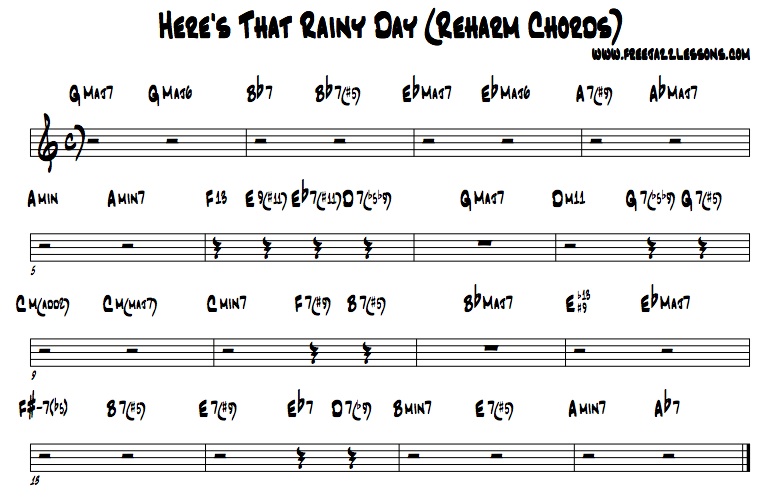
Look at the difference between a typical jazz lead sheet, and a hymn:

Jazz lead sheet

Amazing Grace


Furthermore, when the pianist plays in a jazz combo, they don’t have to play the tonic of the chord (because usually the bass player plays this). This means if I see a G maj7 chord, instead of playing [G B D F#], I would play [B D F#].

Or if I see a E9(#11) chord, instead of playing [E G#  B D#  F#  A#] I would choose 4 notes [G#  D#  F#  A#]. Even more impressive, jazz musicians can invert these chords at whim or divide the notes among the left and right hands.

This certainly makes playing typical hymns or pop music seem a lot easier!

North by Northwest is a program from CBC that showcases artistic and creative talent around the province of BC!  They did a short interview here about the VSO’s inaugural jazz workshop!

Follow the link here to the podcast.  Summer jazz workshop interview starts at 13:15

Jazz Day 4 – nearing the end

This morning, as promised, Jodi brought her friend and mentor Dr. Celeste Snowber to come in and show us what a dancer, poet and educator has to do with jazz. The exercises that we participated in with her seemed strange and artsy (in a hippie kind of way), but the whole point was to show that music comes from deep inside us. In order to express ourselves completely, we need to be able to learn how to tap into our inner self and just let everything FLOW.

Tomorrow is our big day as we are performing the pieces we have been practising on in our combos!

Jazz day 3 – influences

This morning, we met together like we always did.  We had learned an short African song on the first day, and sang it again on Day 2. Today, we learned harmonize (SATB), then added body movement. The teachers added percussive instruments and the entire thing sounded amazing!

One of the questions that the students asked today was “what can we do to further our learning of jazz music, or what can we listen to, to inspire us?” The interesting answer Bill Coon gave was the answer that HE got when he asked HIS teacher: go to the modern museum of art and observe the pieces of art there.

At first, this didn’t make sense to him…but the point was that jazz music is not purely inspired by other jazz music. In fact, jazz music is a type of art, and because of that, it is inspired by other kinds of art.  Everything is interconnected.  To further emphasize this point, Jodi Proznik invited her former teacher (who is also a dancer) to come tomorrow to demonstrate how two art forms like dance and jazz can connect and feed off each other.

Today’s piano masterclass was very helpful – Miles went over the pieces we are working on in our combos, and played them the way HE would have played them (how to “comp”). Miles also talked a bit about his history as a musician.  When he first began learning jazz, it was not a widespread genre of music, and even his teacher was not a jazz expert at that time (all us musicians are on a journey; none have “arrived”).  However, jazz spoke to him in a different way than classical music, because classical music is either played “right” or “wrong”.  However, in jazz, even “wrong”notes can become “right”notes, and it is a truly freeing form of self expression in music.  He also began playing professional gigs after picking up jazz for a few years!  This showed that you don’t always have to know everything before you perform – in fact, performing is the best way to learn. He performed many times before someone came up to his band to explain that they were not following the form when improvising!  But honestly, to the untrained ear, he sounded fantastic 🙂

After lunch every day, the instructors get together for a jam session. This is such a valuable time, because they are SHOWING and not just TALKING about what to do. What a treat to listen to Vancouver’s top jazz musicians performing together every day!  Sometimes even they are surprised by what happens (the best part is when you KNOW something magical is happening, and you can tell by the smiles and acknowledgment on their face that they are experiencing the same thing too).

http://images4.fanpop.com/image/photos/20400000/Piano-piano-20460798-1920-1080.jpg

Jazz Day 2 – cool combos

After an overwhelming day 1 fully immersed in jazz, day 2 seemed to go smoother. Everyone knew the schedule and where they were going, and felt more comfortable making friends. The thing that stood out this day was that our combos (we were put into groups with other musicians playing different instruments) really started to come together and make progress! It certainly takes a lot of trust to be able to improvise especially if you have no idea what you’re doing! Also, the more we practiced, the more cohesive we were as a group. We began to encourage each other and make eye contact during the playing to acknowledge each other. It was so fun to play together!

http://www.ebuckley.com/images/JazzCombo.jpg

Jazz Day 1 – workshop begins

This is the inaugural year of the Summer Jazz Workshop at the VSO School of Music.

The morning began with getting to know each other (there were approx. 50 students there), with 60% high school/young adults and 40% older (ie. over 30). I had no idea who the instructors were, or what they had accomplished in their lives so far, but a quick google search showed they had years of professional experience, with many accomplishments including albums and Junos.

Then it was off to Jazz Theory with Bill Coon, a guitarist, composer and arranger. I put myself into the “intermediate” class because I’ve completed all the RCM theory classes, but have never had a jazz theory class in my life.  Boy, I felt out of my element!  There were terms and chords I had never seen before…I knew I had my work cut out for me. Although Bill explained that he had no formal theory lessons, it was clear he possessed a deep knowledge of the jazz theory and idiom.

After the confusing jazz theory class, it was off to the masterclasses for our instrument of choice. My teacher was Miles Black, an amazing pianist.  He possessed a gentle and patient spirit. Although I was clearly the most inexperienced jazz pianist there, I felt like he did not judge me. However, it was still terrifying to have to improvise in front of the small class of pianists, especially since everyone else seemed to have done this before!

After lunch, we were put into combos. In my group were a drummer, alto sax and tenor sax players, and a bass guitarist. Our coach knew that our group had been put together based on our skill level (which I admit was not very high!), and explained everything slowly and showed us ideas for improv. He cheered us when we played together and started to improvise, (and then forced us to improvise MORE).  I felt like I learned so much through DOING, and it felt great.

Finally, the day ended with listening to a recording in Pyatt Hall. Although I didn’t understand the chord progressions or recognize the form or pick up on the “tag”, I could still enjoy it for what it was.

More Jazz tomorrow!

Jazz Piano and dance lessons for me!

Thelonious Monk
Thelonious Monk

About 4 years ago, I told a young student that I was still taking piano lessons, and he was shocked to find out that his piano teacher “didn’t know everything about music”.

The fact is teachers must always strive to learn and grow, no matter how many years one as been teaching.

That’s why I’ve decided to take a week-long course offered by the Vancouver Symphony Orchestra school of Music in downtown Vancouver.  I’ll be learning the theory and techniques behind jazz music, focusing on the piano (there are other instruments also available).

I’m very excited because I didn’t learn jazz from my piano teachers, but this genre is of more and more interest to piano learners, so in order to keep up, I want to understand and learn how to play jazz piano!

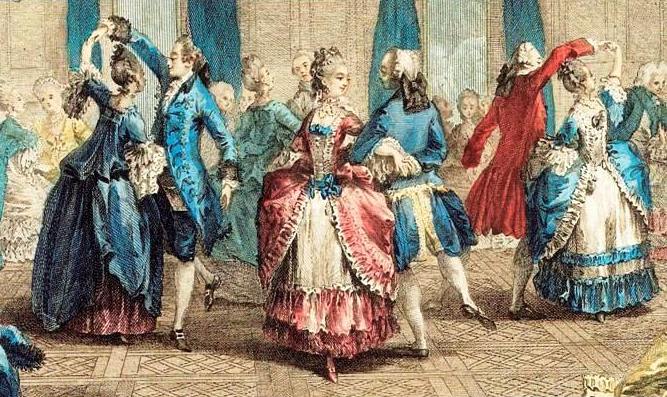
Also, there is an fascinating class offered by Early Music Vancouver called Historical Dance Workshop. The teacher will be instructing beginners on how to dance old forms common in the Renaissance and Baroque periods, such as Bourrees, Menuets, Gavottes, Sarabandes, etc.  This will be super useful in my piano lessons, as music from these time periods are an essential part of learning the piano, and I believe that learning how to dance these forms will make the music come alive and be more interesting (especially to young musicians who have no idea who Bach or Palestrina are).

Daniel Rabbel: “The Royal Ballet of the Dowager of Bilbao's Grand Ball” (1626)
Daniel Rabbel: “The Royal Ballet of the Dowager of Bilbao’s Grand Ball” (1626)

I’ll try to update my blog regularly to let you know how the classes go!

See?  Teachers also take summer school 🙂

Classical music is not dead

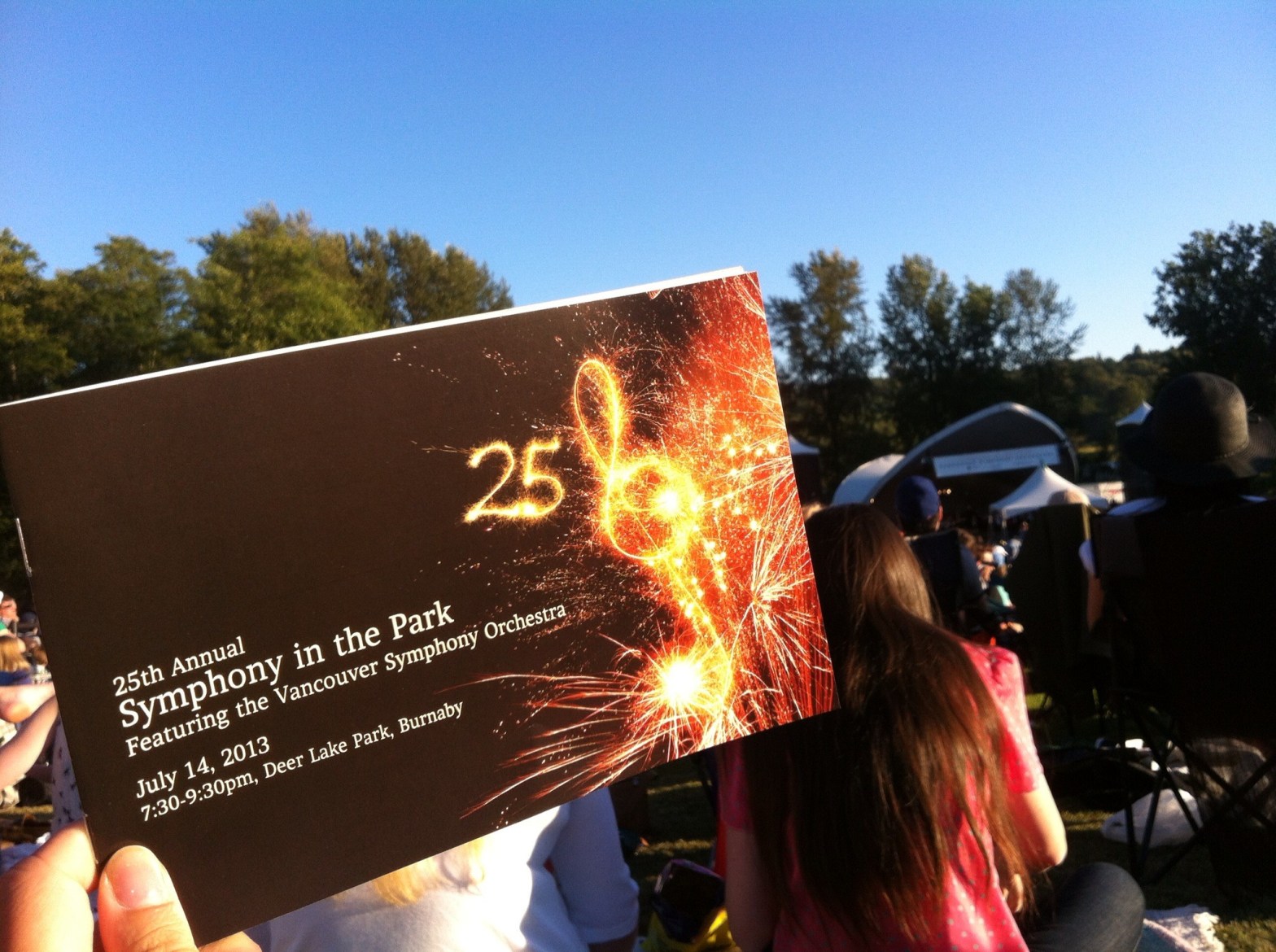
“Classical music is not dead”. That’s the thought that came to mind when I arrived at Deer Lake Park in Burnaby on July 14 for the 25th Annual Symphony in the Park featuring the Vancouver Symphony Orchestra.

I was shocked at HOW MANY people there were at the park (estimated 10,000!). The tourist board of Burnaby were not kidding with this: “Be sure to come early, bring a blanket, pack a picnic and settle in for a wonderful evening with the Vancouver Symphony Orchestra”. And what a diverse group – young, old, families, teens!

I also unfortunately did not read: “Please note that parking in the vicinity is limited, so alternate transportation is recommended.”     This meant I wasted 15 minutes in a futile attempt to find parking, and ending up parking in a residential area off Canada Way (approx. 20 min walk from the park!).

But it was all worth it because it was a beautiful, warm and sunny evening, with the lake behind the stage, and the Shadbolt Centre on the opposite end. Ice cream, hot dog, drinks, mini-donut stands were set up, along with appropriate police and ambulance attendants. (see below)

Deer lake personal 2

Here’s an idea of how many people there were:

Deer lake panoramaThe program was a mix of very well-known pieces, including Rachmaninoff’s Rhapsody on a Theme of Paganini, previously performed at the same venue and by the same pianist, Avan Yu,  11 years ago.The VSO also performed the 1812 Overture by Tchaikovsky, which has been performed over 12 times at Symphony in the Park, the most of any piece!

The symphony was directed by Gordon Gerrard, the VSO’s Assistant Conductor.

It was evident that Avan was very comfortable returning to Deer Lake to perform, and the audience loved him. He is below in a white tuxedo, while Gordon was in black.

Deer Lake close upAvan came back for an encore, and played “The Flight of the Bumblebee” by Rimsky-Korsakov, which clearly demonstrated his lightning quick fingers and technical skill.

Quick Quiz (answer in the comments section): What piece is this excerpt from?

After the concert, there were fireworks!  What a fantastic way to enjoy music for free!